Table of Contents
The Cambridge IGCSE curriculum is one of the world’s most recognised secondary education programmes, designed to prepare students for higher education and the evolving demands of the modern world. Developed by Cambridge Assessment International Education, the curriculum is renowned for its academic rigour, flexibility, and emphasis on developing independent learners. Rather than focusing solely on examination performance, the IGCSE encourages students to build critical-thinking, problem-solving, communication, and research skills that remain valuable throughout university, future careers, and lifelong learning. As a result, the IGCSE curriculum has become a preferred pathway for families seeking an internationally recognised education that balances academic excellence with practical skill development.
In many of the best international schools in Cambodia, the popularity of Cambridge education has steadily increased over the past decade as more parents recognise the value of internationally recognised qualifications. With greater awareness of global university opportunities and the growing demand for graduates equipped with transferable skills, many international schools across the country now offer Cambridge programmes from the primary years through to IGCSE and A Levels. The strong reputation of Cambridge International Examinations, combined with the curriculum’s flexibility and worldwide recognition, has made it an attractive choice for families seeking a future-ready education for their children.
In this guide, we will explore:
- What the Cambridge Curriculum is and how it supports student development
- The Cambridge Learning Framework and the globally recognised IGCSE qualification
- The key features that make the Cambridge IGCSE curriculum future-ready
- The advantages of the Cambridge Curriculum compared with other international curricula
What Is the Cambridge Curriculum?
The Cambridge Curriculum is an internationally recognised educational framework developed by Cambridge Assessment International Education. It provides a continuous pathway from early childhood through to pre-university education, allowing students to progressively build knowledge, skills, and confidence as they move through different stages of learning. At the secondary level, students typically progress into the Cambridge IGCSE curriculum, which serves as one of the most widely recognised qualifications for learners aged 14 to 16.
The Cambridge Curriculum is important because it focuses on developing learners who are confident, responsible, reflective, innovative, and engaged. Rather than relying heavily on memorisation, students are encouraged to explore concepts, apply knowledge, and think critically about real-world situations. These qualities prepare learners not only for examinations but also for university study and future careers where adaptability and independent thinking are increasingly valued.
A practical example of the Cambridge approach can be seen in classroom learning, where students are often encouraged to investigate real-life issues, collaborate on projects, and present evidence-based conclusions. Rather than simply recalling information from textbooks, learners are challenged to analyse data, evaluate different perspectives, and communicate their ideas clearly. These experiences help students develop skills that remain relevant long after they complete their secondary education.
The Cambridge Learning Framework
The Cambridge Learning Framework is built around developing both academic knowledge and transferable life skills. It provides clear learning objectives at every stage while encouraging schools to deliver lessons in ways that inspire curiosity, creativity, and independent learning.
This framework is important because it ensures students experience consistent academic progression while also developing broader competencies. Instead of viewing education purely as preparation for examinations, the framework encourages learners to become adaptable individuals capable of solving problems, communicating effectively, and working collaboratively.
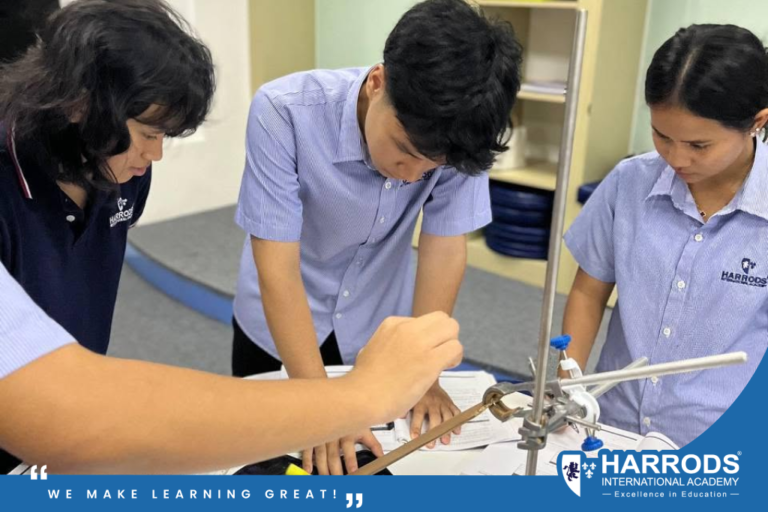
For example, during a science lesson, students may investigate environmental issues by designing experiments, collecting evidence, and presenting their findings. At the same time, they are strengthening analytical thinking, teamwork, and presentation skills. These experiences demonstrate how the Cambridge Learning Framework combines academic rigour with practical skill development.
The Globally Recognised IGCSE
The International General Certificate of Secondary Education (IGCSE) is one of the flagship qualifications within the Cambridge pathway. It is recognised by universities, employers, and educational institutions in countries around the world, providing students with internationally respected academic credentials.
Its global recognition is particularly valuable because it offers students greater flexibility when applying to universities both locally and internationally. Whether learners continue to Cambridge International A Levels, the International Baccalaureate Diploma Programme, or other pre-university qualifications, the IGCSE provides a strong academic foundation for future progression.
A good example can be seen in students who later pursue university education overseas. Because the Cambridge International Examinations framework is widely recognised, admissions officers are familiar with the academic standards and skills associated with IGCSE qualifications. This recognition can provide students with broader educational opportunities and smoother transitions into higher education.
Key Features Of The Cambridge Curriculum
One of the reasons the Cambridge IGCSE curriculum is regarded as future-ready is its balanced approach to academic achievement and personal development. The curriculum is designed not only to prepare students for examinations but also to equip them with practical skills that will remain valuable throughout their lives.
Strong Focus On Problem Solving And Critical-Thinking
Problem-solving and critical thinking are central to the Cambridge philosophy. Students are encouraged to question assumptions, evaluate evidence, and develop reasoned conclusions rather than relying solely on memorisation.
These skills are increasingly important because modern workplaces and universities require individuals who can think independently, adapt to new challenges, and solve complex problems. The ability to analyse information critically is valuable across every academic discipline and professional field.
For example, a student studying Geography may be asked to evaluate the environmental and economic impacts of urban development rather than simply memorising geographical facts. Through this process, learners strengthen analytical reasoning while developing the confidence to support their conclusions with evidence.
Developing Skills Beyond Academics
The Cambridge Curriculum recognises that successful learners require more than academic knowledge. Communication, collaboration, leadership, resilience, and self-management are all important qualities that contribute to long-term success.
This broader approach is important because students will eventually enter workplaces that value interpersonal skills alongside technical expertise. By developing these competencies during secondary school, learners become better prepared for university life and future careers.
A strong example can be seen during collaborative classroom projects. Students may work together to investigate scientific questions, prepare presentations, or solve practical challenges. Through these experiences, they develop teamwork, leadership, organisation, and communication skills while also mastering subject content.
Learners Have Agency Over Subject Choices
One of the strengths of the IGCSE curriculum is the flexibility it offers through subject selection. Students are able to choose from a broad range of subjects based on their interests, strengths, and future educational goals.
This flexibility is important because it allows learners to personalise their educational journey while preparing for specific university pathways or career aspirations. Rather than following a rigid curriculum, students can build combinations that reflect both academic requirements and personal interests.
For example, a student interested in engineering may choose to focus on Mathematics, Physics, and Computer Science, while another aspiring to study law may combine English Literature, History, and Global Perspectives. This flexibility allows students to pursue subjects that align with their ambitions while maintaining a well-rounded education.
Advantages of the Cambridge Curriculum
The following comparison highlights how the Cambridge Curriculum differs from several other internationally recognised education systems.
Cambridge Curriculum | International Baccalaureate (IB) | American Curriculum | |
Curriculum Flexibility | Wide subject choice allows students to tailor their learning based on strengths and career goals. | Broader programme with compulsory core components and balanced subject requirements. | Flexible course selection varies by school and state requirements. |
Academic Focus | Strong emphasis on subject mastery, analytical thinking, and academic depth. | Strong emphasis on interdisciplinary learning, inquiry, and holistic development. | Broad general education with flexibility in elective choices. |
Assessment Style | Combination of coursework (where applicable) and externally moderated examinations. | Internal assessments combined with external examinations and core programme components. | Primarily school-based assessments with grading systems varying by institution. |
International Recognition | Highly recognised by universities and employers worldwide through Cambridge International qualifications. | Globally recognised by universities, particularly for its holistic approach. | Widely recognised, particularly in North America, depending on accreditation. |
Subject Specialisation | Students begin specialising according to interests while maintaining academic breadth. | Students study six subject groups alongside TOK, CAS, and the Extended Essay. | Students generally follow broader graduation requirements before university specialisation. |
Skills Development | Focus on critical thinking, problem-solving, independent learning, and academic preparation. | Focus on inquiry, global citizenship, research, and reflective learning. | Focus varies by school but often includes practical and interdisciplinary learning. |
This comparison demonstrates that each curriculum has unique strengths. The Cambridge Curriculum is particularly attractive for students seeking academic rigour, internationally recognised qualifications, flexible subject choices, and strong preparation for university-level study.
Conclusion
The Cambridge IGCSE curriculum has earned its reputation as one of the world’s leading secondary education programmes by combining academic excellence with practical skill development. Through the Cambridge Learning Framework, students are encouraged to think critically, solve problems independently, communicate effectively, and become confident lifelong learners. Its internationally recognised qualifications, flexible subject choices, and emphasis on transferable skills make it an excellent pathway for students preparing for higher education and future careers.
As Cambridge education continues to grow in popularity across Cambodia, more families are recognising the long-term value of a curriculum that prepares students not only for examinations but also for an increasingly complex global society. Whether students plan to continue to A Levels, university, or future professional opportunities, the IGCSE curriculum provides a strong foundation that supports academic achievement, personal growth, and lifelong success.
FAQ
Admission requirements vary between schools. Most schools assess previous academic performance, English language proficiency where appropriate, and may conduct placement assessments or interviews to determine the most suitable year level.
The admission process typically includes submitting an application form, providing previous academic records and supporting documents, attending an interview or assessment if required, and receiving an admission decision from the school.
Yes. Most Cambridge schools provide academic counselling to help students choose subjects that align with their strengths, interests, university aspirations, and future career goals.
The Cambridge IGCSE programme is well suited to students who enjoy academic challenge, independent learning, critical thinking, and who may wish to pursue internationally recognised qualifications for future university study.
Students who are planning to attend universities in Cambodia or overseas, value internationally recognised qualifications, and prefer a curriculum that combines academic rigour with flexible subject choices should consider pursuing Cambridge IGCSE followed by Cambridge International A Levels.