Table of Contents
Choosing the right educational approach is one of the most important decisions parents make during their child’s early years. Among the many options available today, the Montessori method has become one of the most widely recognised approaches to early childhood education. Developed by Dr Maria Montessori in the early 1900s, this philosophy centres on child-led learning, hands-on exploration, and fostering independence from an early age. Rather than relying primarily on teacher-directed instruction, Montessori education encourages children to learn through purposeful activities, self-discovery, and carefully prepared environments that nurture both academic and personal development.
The choice between Montessori and traditional education extends beyond selecting a curriculum—it shapes how children develop their attitudes towards learning, problem-solving, collaboration, and independence. Early childhood is a critical developmental period when cognitive, emotional, physical, and social foundations are established. Selecting an educational approach that aligns with a child’s learning style and developmental needs can have a lasting influence on future academic success and personal confidence.
In Cambodia, the Montessori approach has gained increasing popularity as more international schools adopt learner-centred educational philosophies. Parents are becoming more aware of the importance of nurturing curiosity, creativity, and lifelong learning rather than focusing exclusively on academic achievement when enrolling them even before the primary school level. As international education continues to expand across the country, Montessori programmes have become an attractive option for families seeking a balanced approach that combines independence, practical life skills, and holistic child development.
In this guide, we will explore:
- What the Montessori Method is and how it supports children’s development
- The core characteristics that distinguish Montessori education from conventional classrooms
- The differences between Montessori vs traditional education and how each approach supports different learners
- Factors parents should consider when choosing the most suitable educational pathway for their child
What Is The Montessori Method?
The Montessori Method is an educational philosophy that places children at the centre of their own learning. Developed by Italian physician and educator Dr Maria Montessori, the approach encourages learners to explore, discover, and develop independence through carefully designed environments and purposeful activities. Instead of following rigid lesson structures where every child learns the same material at the same pace, Montessori classrooms allow children to progress according to their own developmental readiness and interests.
This child-centred philosophy is particularly valuable during early childhood because young learners are naturally curious and motivated to explore the world around them. By giving children opportunities to make choices, solve problems, and learn through direct experience, Montessori education helps develop confidence, responsibility, and intrinsic motivation. Rather than viewing mistakes as failures, the Montessori approach treats them as valuable opportunities for growth and reflection.
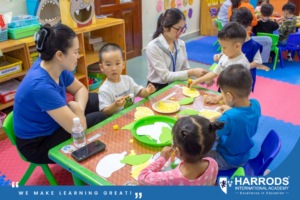
A practical example can be seen in a Montessori classroom where children independently select learning materials from open shelves. One child may choose mathematical manipulatives to explore number concepts, while another works on language activities or practical life exercises. Teachers observe, guide, and support when necessary, allowing each learner to progress at a pace that reflects their individual development rather than the progress of the entire class.
An Explorative Approach to Early Development
Exploration is one of the defining characteristics of the Montessori Method. Children are encouraged to investigate concepts through hands-on experiences that stimulate curiosity and independent thinking. Learning occurs through meaningful interaction with carefully prepared materials rather than passive instruction.
This explorative approach is important because it supports active engagement and deeper understanding. Young children naturally learn by touching, experimenting, observing, and repeating activities until they gain mastery. Montessori environments embrace this natural developmental process by allowing children to take ownership of their learning experiences.
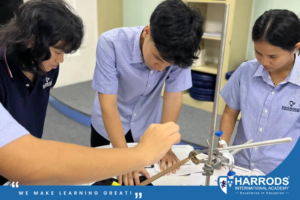
For example, a child learning about measurement may use specially designed Montessori materials to compare sizes, weights, and lengths through direct manipulation. Rather than memorising definitions from a worksheet, the child develops conceptual understanding by physically interacting with the learning materials, making the experience more memorable and meaningful.
Areas of Development
The Montessori Method supports several key developmental areas that contribute to the holistic growth of every child.
|
Area of Development |
Brief Explanation |
|
Cognitive Development |
Develops reasoning, problem-solving, concentration, and independent thinking through hands-on learning experiences. |
|
Language Development |
Strengthens vocabulary, reading, writing, listening, and verbal communication through purposeful language activities. |
|
Practical Life Skills |
Builds independence by teaching children everyday tasks such as organising, cleaning, pouring, dressing, and caring for their environment. |
|
Sensorial Development |
Refines the senses through specially designed materials that encourage observation, comparison, and classification. |
|
Social Development |
Encourages cooperation, respect, empathy, responsibility, and positive interactions with peers across mixed-age classrooms. |
|
Emotional Development |
Supports confidence, self-regulation, resilience, patience, and emotional independence. |
|
Physical Development |
Improves fine motor and gross motor coordination through practical activities and movement-based learning experiences. |
These interconnected developmental areas demonstrate why Montessori education places equal emphasis on academic growth and personal development. Rather than treating learning as purely intellectual, the Montessori Method recognises that children’s emotional, social, and physical development contributes significantly to their overall educational success.
The Montessori Method
Collaborative Learning Approach
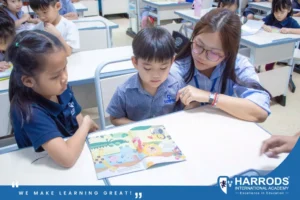
Although Montessori classrooms encourage independent learning, collaboration also plays an important role. Children frequently observe one another, work together on activities, and learn through peer interaction. Mixed-age classrooms further encourage older students to mentor younger learners while reinforcing their own understanding.
This collaborative environment is important because it develops communication, empathy, leadership, and teamwork alongside academic skills. Rather than competing for grades or class rankings, children learn to appreciate cooperation and shared problem-solving.
For example, older learners may naturally assist younger classmates in using Montessori materials correctly or explain concepts they have already mastered. These interactions build confidence in both children while strengthening classroom relationships and creating a supportive learning community.
Elaborate And Interactive Classroom Environment
Montessori classrooms are intentionally designed to encourage exploration, independence, and concentration. Learning materials are organised, accessible, and developmentally appropriate, allowing children to make choices independently.
The classroom environment itself becomes an important educational tool. Carefully prepared spaces promote responsibility, organisation, and self-directed learning while encouraging children to engage with materials that match their interests and readiness.
A good example can be seen when children freely move between learning stations throughout the day, selecting activities that capture their curiosity. This freedom encourages ownership of learning while allowing teachers to observe each child’s progress and provide guidance when appropriate.
Skill-Focused In Addition To Cognitive Development
The Montessori Method extends beyond academic instruction by intentionally developing life skills alongside cognitive abilities. Practical life exercises, collaboration, communication, creativity, and emotional regulation are integrated into everyday learning experiences.
This broader focus is particularly important because future success depends on much more than academic achievement alone. Children also require resilience, adaptability, independence, and interpersonal skills to navigate increasingly complex educational and professional environments.
For instance, practical life activities such as preparing snacks, arranging classroom materials, or caring for plants teach responsibility, organisation, and independence while simultaneously strengthening concentration and fine motor skills.
Educators With Specialised Qualification
Montessori educators receive specialised training that enables them to understand child development, prepare learning environments, and guide rather than direct learning. Their role differs from that of traditional teachers because they act primarily as facilitators who observe each child’s progress and intervene thoughtfully when support is needed.
This specialised preparation is essential because effective Montessori teaching requires deep understanding of developmental milestones, observation techniques, and child-centred instructional strategies.
For example, rather than immediately correcting mistakes, Montessori teachers often encourage children to identify and resolve errors independently using self-correcting materials. This approach helps learners develop confidence, perseverance, and problem-solving abilities.
Evaluation Through Non-Conventional Assessment Methods
Montessori classrooms typically rely on continuous observation, portfolios, and developmental records rather than frequent standardised testing. Teachers assess how children apply knowledge, interact with materials, and demonstrate progress over time.
This assessment approach is important because it provides a more comprehensive understanding of each learner’s development. Rather than focusing solely on examination scores, educators consider cognitive, social, emotional, and practical growth when evaluating student progress.
For example, a teacher may document how a child’s concentration, independence, communication, and confidence improve over several months through observations and collected work samples. These records provide valuable insights into developmental progress that traditional examinations may not fully capture.
How The Montessori Method Differs from Traditional Learning
Parents often compare Montessori vs traditional education when deciding which learning environment best suits their child. While both approaches aim to support children’s development, they differ significantly in teaching philosophy, classroom structure, assessment, and the role of the learner.
|
Montessori Education |
Traditional Education |
|
|
Learning Philosophy |
Child-led, inquiry-based, self-directed learning. |
Teacher-directed instruction following a structured curriculum. |
|
Classroom Structure |
Flexible, mixed-age classrooms with prepared learning environments. |
Students grouped primarily by age with fixed classroom routines. |
|
Teacher’s Role |
Facilitator and guide who supports individual development. |
Instructor who delivers lessons to the entire class. |
|
Learning Pace |
Individualised according to each child’s readiness. |
Generally follows the same pace for all students. |
|
Assessment |
Continuous observation, portfolios, and developmental records. |
Primarily quizzes, examinations, and standardised assessments. |
|
Student Independence |
High emphasis on self-direction and responsibility. |
Greater reliance on teacher guidance and structured instruction. |
|
Collaboration |
Encourages peer learning and mixed-age interaction. |
Collaboration varies depending on classroom activities. |
|
Practical Life Skills |
Integrated into everyday learning experiences. |
Usually less emphasis within the formal curriculum. |
Neither approach is universally better for every child. The difference between Montessori and traditional method lies primarily in how learning is organised and delivered. Families should consider their child’s personality, learning preferences, developmental needs, and long-term educational goals when selecting the most appropriate environment.
Conclusion
Choosing between Montessori education and traditional education is a highly personal decision that depends on each child’s unique strengths, interests, and learning style. While traditional classrooms often provide structured instruction and clearly defined academic progression, Montessori education offers a learner-centred environment that emphasises independence, exploration, collaboration, and holistic development. Both approaches have strengths, and understanding the difference between Montessori and traditional method allows parents to make more informed educational decisions.
As more international and private schools in Cambodia adopt child-centred educational philosophies, Montessori programmes continue to gain recognition for their ability to nurture confident, curious, and capable learners. By carefully considering classroom environment, teaching philosophy, assessment methods, and long-term educational goals, parents can select an approach that provides their child with the strongest possible foundation for lifelong learning and future success.
If you are interested in enrolling with Harrods International Academy, check out our admissions to learn about our available intakes!
Montessori education is particularly well known for promoting independence by encouraging children to make choices, manage their own learning, and complete practical life activities with increasing confidence.
Although Montessori programmes are available across multiple age groups, the approach is especially beneficial during the early childhood years, when children are developing foundational cognitive, social, emotional, and practical life skills.
Many children thrive in Montessori environments, particularly those who enjoy exploration, hands-on learning, and self-directed activities. However, the most suitable educational approach depends on each child’s learning style, personality, and individual needs.
Parents should consider their child’s learning preferences, developmental needs, personality, future educational goals, and the teaching philosophy of each school. Visiting schools and speaking with educators can also provide valuable insights before making a decision.
Although the IEYC (International Early Years Curriculum) differs from the Montessori approach, teachers typically assess children’s progress through continuous observation, developmental records, portfolios, and evidence gathered during classroom activities rather than relying solely on formal examinations.