Education is more than just learning facts and figures. It is about preparing children to thrive in a complex, ever-changing world. One method that has gained worldwide recognition for its innovative and child-centred approach is the Montessori Programme. Founded by Dr. Maria Montessori in the early 1900s, this system of education focuses on holistic growth, encouraging independence, curiosity, and critical thinking from an early age.
A Holistic Approach to Education
The Montessori Programme is a unique educational approach that emphasises hands-on learning, self-directed activity, and collaborative play. Instead of traditional learning, children are encouraged to explore, experiment, and discover knowledge at their own pace; the essence of what is Montessori method.
This approach is important because it nurtures not only academic skills but also emotional, social, and creative growth. Montessori education recognises that each child learns differently, and by providing freedom within structure, it cultivates lifelong learners who are curious and confident.
To put this into practice, Montessori classrooms are designed with specialised materials that encourage exploration and independence. Teachers act as guides rather than lecturers, fostering an environment where children learn responsibility, decision-making, and problem-solving naturally; one of the many Montessori Programme benefits.
Teaches Kids to Be Problem Solvers
One of the core benefits of Montessori education is its focus on problem-solving. In a Montessori classroom, children are given real-world tasks and puzzles that challenge them to think critically and independently. Rather than being given immediate answers, they are encouraged to figure things out on their own.
This is important because problem-solving is a skill that extends far beyond the classroom. Children who learn to approach challenges calmly and creatively are better prepared for both academic and life situations. It helps them develop resilience and adaptability, the two qualities vital in today’s fast-changing world.
To strengthen this skill, Montessori educators provide materials and activities that require children to test solutions, make mistakes, and try again. Whether it is completing a math puzzle or building a project, the process teaches persistence and self-confidence.
Fosters Curiosity and Encourages Critical-Thinking
The Montessori education is built on sparking curiosity. Instead of memorising information, children are guided to ask questions, explore topics deeply, and draw their own conclusions. This encourages them to be active participants in their own learning; a key aspect of the Montessori curriculum.
This benefit is important because critical thinking equips children with the ability to analyse information, question assumptions, and make informed decisions. In a world filled with constant information, being able to think critically is more valuable than ever.
The remedy lies in how Montessori classrooms are designed, by filling them with interactive learning tools and opportunities for exploration. Children might investigate how plants grow, explore geometric shapes, or observe science experiments. By allowing curiosity to guide learning, children become engaged thinkers rather than passive learners.
Familiarise Kids with Social and Emotional Skills
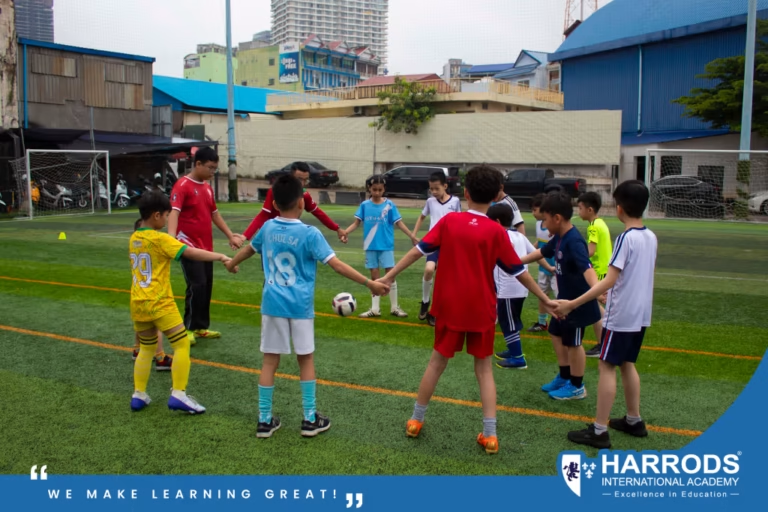
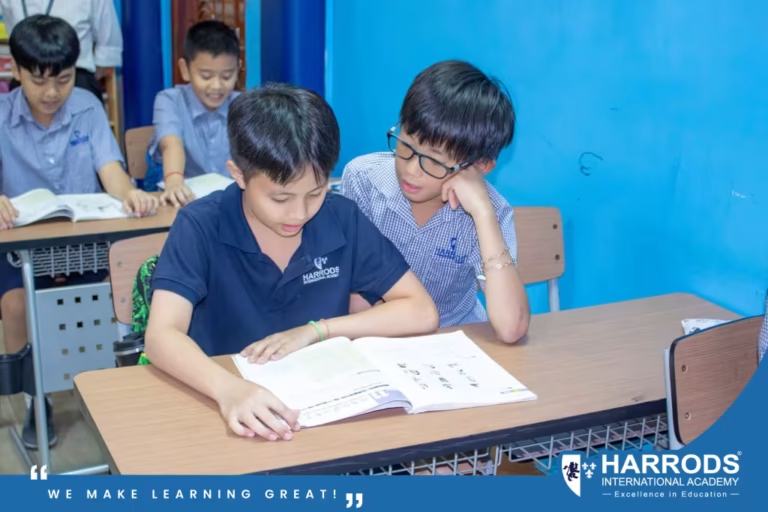
Academic success is only one of the many parts of a child’s development. The Montessori Programme also emphasises social and emotional growth by fostering environments where children of different ages learn together. This setting naturally encourages empathy, cooperation, and leadership.
This benefit is important because social and emotional intelligence helps children build strong relationships, manage stress, and navigate challenges throughout life. Kids who develop these skills early are more confident, collaborative, and resilient in group settings.
Montessori classrooms remedy gaps in emotional learning by providing daily opportunities for children to work in groups, share responsibilities, and resolve conflicts. Teachers guide students in practising patience, kindness, and active listening, helping them build essential interpersonal skills.
Inspire Kids To Explore Different Cognitive and Creative Proficiencies
The Montessori approach does not limit education to reading, writing, and arithmetic. Instead, it embraces the development of a wide range of skills, which include artistic expression, practical life tasks, and scientific discovery. Children are encouraged to explore activities that nurture both cognitive and creative proficiencies.
This is important because every child has unique strengths. Some may excel in logical reasoning, while others thrive in creative problem-solving or artistic pursuits. Montessori education ensures that children have the freedom to explore and develop in multiple areas, not just traditional academics.
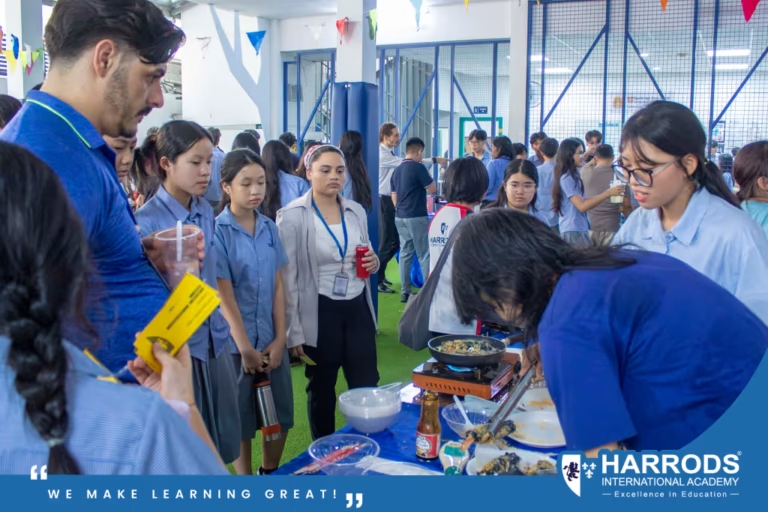
To remedy narrow learning experiences, Montessori classrooms provide diverse materials, from musical instruments to building blocks to science kits. Children are free to explore different domains, discovering new interests and strengthening multiple skill sets along the way.
In Summary
The Montessori Programme goes beyond conventional education by developing the child’s mind, body, and spirit. From teaching problem-solving skills to encouraging curiosity, fostering social-emotional intelligence, and allowing children to explore different cognitive and creative pathways, the benefits of Montessori education are vast.
Ultimately, Montessori Cambodia prepares children not just for school but for life. By nurturing independence, resilience, and a love of learning with closely aligned international early year curriculum, this holistic approach equips students with the skills they need to succeed academically, socially, and personally with a simplified admission procedure in schools for parents.