Table of Contents
Before exploring its impact, let’s begin by understanding what group discussion is and why it matters in education. Group discussion refers to a structured conversational exchange among students, often guided by a teacher or facilitator, where participants share ideas, debate perspectives, and collaboratively build an understanding of a topic.
In academic settings, group discussion is much more than casual conversation—it’s an active learning tool that encourages students to think critically, express their thoughts clearly, and listen to others with respect. It transforms passive learning into an engaging process where students not only absorb information but also learn to analyse, evaluate, and apply it.
So, why is group discussion important? Because it develops essential life and academic skills such as teamwork, leadership, communication, and confidence—all of which prepare students to succeed in classrooms and beyond. Below are five ways group discussions enhance the learning experience for students.
1. Valuing the Benefits of Teamwork
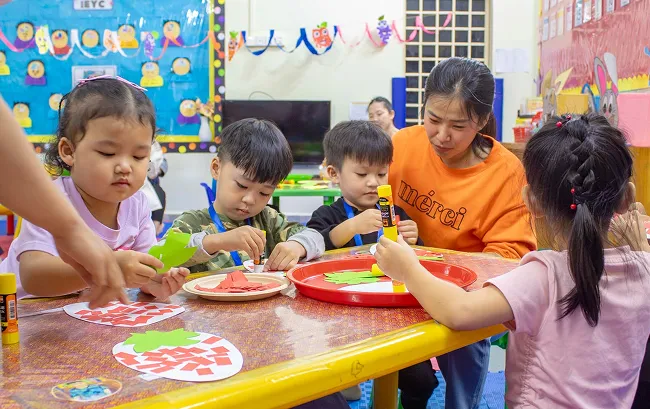
One of the greatest advantages of group discussion is that it nurtures teamwork among students. When students collaborate in groups, they learn how to work collectively toward a common goal, share ideas, and appreciate different perspectives.
Teamwork is a cornerstone of effective learning and professional success. Through discussion-based collaboration, students recognise that everyone brings unique strengths to the table. Group activities teach them how to compromise, support others, and make decisions together—skills that are invaluable both academically and personally.
For instance, when students engage in a group science project, one might excel at research, another at presentation, and a third at data analysis. Working together allows each to contribute based on their strengths while learning from others. Teachers often observe that teamwork in discussions also boosts peer relationships, making classrooms more inclusive and cooperative environments.
2. Allows Students To Demonstrate Their Critical-Thinking Capacity
Another essential benefit of group discussion in education is its ability to enhance critical thinking. Discussions challenge students to articulate their viewpoints, justify their opinions with logic, and respond thoughtfully to opposing arguments.
Critical thinking lies at the heart of modern education. By participating in group discussions, students move beyond memorisation and begin to analyse information deeply. They learn how to construct sound arguments, evaluate evidence, and refine their understanding through dialogue. This process not only sharpens reasoning skills but also strengthens intellectual independence. Many international schools in Cambodia also integrate structured group discussions to boost analytical and communication skills among students.
For example, in a literature class, when students debate a character’s motivation in a novel, they must interpret textual evidence and defend their interpretations. Similarly, in a social studies discussion about global issues, students must assess facts and consider multiple viewpoints. These exercises push them to think critically and to understand that complex problems rarely have one correct answer.
3. Provides Opportunity for and Cultivates Skills in Leadership
Group discussion provides a natural platform for students to develop leadership skills. Within group settings, some students take initiative in organising ideas, guiding conversations, and ensuring that every voice is heard.
Leadership in education is not about dominance—it’s about responsibility, empathy, and direction. Group discussions create safe spaces for students to practise these qualities. They learn how to facilitate dialogue, resolve disagreements, and inspire collaboration—traits that are critical for both academic and career success.
A student who leads a classroom discussion on environmental sustainability learns to manage differing opinions while keeping the group focused on the topic. Teachers can also rotate discussion leaders, allowing every student to experience both leading and following. Over time, this helps students understand the dynamics of effective leadership and teamwork.
4. Builds Confidence by Encouraging Students To Speak Up
One of the most profound benefits of group discussion is its ability to build confidence in students. Speaking in front of peers can be intimidating, but regular participation in discussions helps students overcome fear and express their ideas clearly.
Confidence is essential for academic success and personal growth. When students feel safe to voice their opinions, they become more engaged and motivated to participate. Group discussions provide an encouraging environment where mistakes are seen as learning opportunities rather than failures, fostering both self-esteem and resilience.
For instance, a shy student who hesitates to speak during a lecture might feel more comfortable contributing during a small group discussion. Over time, they gain the courage to share their views more openly. Many schools report that consistent group discussions improve students’ class participation, public speaking, and self-expression skills, which are vital for future interviews and presentations.
5. Exercises and Improves Communication Skills
Finally, group discussion is one of the most effective ways to enhance students’ communication skills. It teaches them to listen actively, articulate ideas clearly, and engage respectfully with others’ perspectives.
Communication is one of the most transferable skills students can develop. In academic discussions, students learn to structure their thoughts logically and present arguments coherently. Moreover, listening is as important as speaking; understanding different viewpoints broadens their perspectives and strengthens their emotional intelligence.
In classroom settings, teachers might assign rotating roles such as speaker, note-taker, or summariser to help students practise active listening and structured communication. Group debates and peer-review sessions are also powerful methods to improve clarity of speech, tone, and confidence in verbal expression. Over time, these communication skills become assets in higher education and the workplace.
In Summary
When reflecting on what group discussion is, it becomes clear that it is much more than a classroom activity—it is a dynamic educational process that fosters connection, curiosity, and collaboration. Through teamwork, critical thinking, leadership, confidence, and communication, group discussions enrich learning and transform classrooms into spaces of mutual respect and intellectual growth.
So, why is group discussion important? Because it prepares students not only to excel academically but also to succeed as confident, articulate, and empathetic individuals. In an era where collaboration and communication define success, the power of group discussions in shaping minds and futures cannot be overstated—especially in modern international primary schools, where communication and teamwork skills are developed from an early age.