Table of Contents
What Is self-assessment and Why Does It Matter?
Before exploring its advantages, it is important to first understand what self-assessment is. In education, self-assessment refers to a reflective learning strategy where students evaluate their own academic performance, skills, and progress. Instead of relying solely on teachers to measure their abilities, students take responsibility for identifying their strengths, weaknesses, and areas for improvement.
Self-assessment in education encourages responsibility, critical thinking, and self-awareness—skills that are essential not just in school but in life beyond graduation. High school is a crucial stage of academic development, where students prepare for university, careers, and adulthood. At this level, self-assessment in education becomes an invaluable tool that promotes independence, lifelong learning habits, and emotional maturity.
Below are some of the key benefits of self-assessment in high school and why schools should integrate this practice into their learning framework.
1. Teaches Students To Get Accustomed to Independent Learning
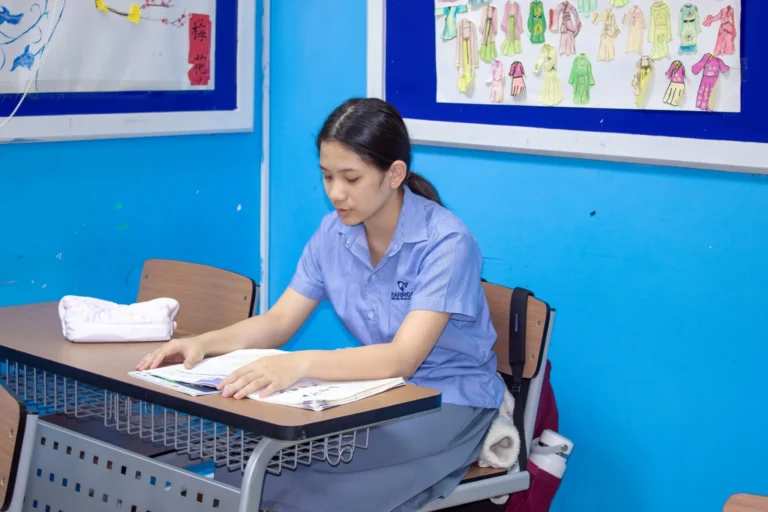
One of the major benefits of self-assessment is that it helps students become independent learners. Instead of waiting for feedback from teachers, students take the initiative to evaluate their own performance. They learn to monitor their own progress, set learning goals, and take ownership of their academic journey.
Independent learning is vital in today’s world, where success depends on the ability to think autonomously and solve problems without constant supervision. Students who learn independently develop strong decision-making skills and take accountability for their outcomes. This prepares them for future challenges in university and professional life, where self-directed learning is expected.
High school students who use high school self-assessment checklists while preparing for exams are better able to identify which topics they have mastered and which need additional revision. Homework reflection logs, where students note what they found easy or difficult, also promote independent learning habits. Over time, these students become more proactive and handle academic responsibilities with confidence.
2. Emphasises the Student’s Ability to Research Meticulously
Self-assessment in education naturally encourages students to conduct thorough research and critical analysis. In order to reflect on their understanding, students must review content, check sources, and compare their knowledge with reliable references.
At many modern institutions—including Cambodia International Academy—self-assessment forms an important part of project-based and inquiry-based learning, helping students build stronger academic discipline.
Research is one of the most important academic skills students need, especially at the high school level as they prepare for extended essays, science projects, and real-world problem-solving. Through self-assessment in education, they don’t just memorise—they learn how to investigate topics in depth. This promotes academic integrity, curiosity, and intellectual exploration.
In project-based learning, students often evaluate their findings against academic journals or teacher rubrics. When writing essays, self-assessment rubrics help students check structure, citation accuracy, and content relevance before submission. Science experiment reflections also prompt students to verify results using trusted scientific explanations. These practices promote strong research habits and disciplined study behaviour.
3. Continuous Improvement: Identifying Mistakes and Learning From Them
Self-assessment in education trains students to recognise and correct their own mistakes, which is a critical element of continuous improvement. Instead of viewing mistakes negatively, self-assessment encourages students to approach errors as learning opportunities.
One of the biggest challenges in education is helping students develop resilience and a growth mindset. When students reflect on their mistakes and identify why they occurred, they become problem-solvers. They no longer rely on teachers to point out errors—they learn to self-correct and take responsibility for improvement. This mindset prepares them to face academic and career challenges in the future.
For example, a student who receives a lower score on a math test might use a reflection sheet to identify which formulas or steps were misunderstood. They then create a plan to review and practise weak concepts. In languages, students can review marked essays to understand common grammar errors. By tracking these patterns over time, they steadily improve accuracy and performance.
4. Builds Confidence in Assessing Personal Skills and Subject Understanding
Another powerful benefit of self-assessment in education is that it boosts student confidence. When students evaluate their own work, they develop self-awareness and trust in their academic abilities. They become better at judging their understanding of a topic and identifying what they truly know.
Confidence is not built by constant praise—it grows through awareness, effort, and progress. Students who engage in high school self-assessment become more comfortable expressing what they know and asking for help when they need it. This leads to emotional maturity and encourages students to take academic risks and participate actively in class.
High school teachers often use student-led conferences where learners present their own progress to teachers and parents. This helps students take credit for their learning achievements. Peer review sessions, where students assess each other’s work, also build confidence by developing judgment skills. Progress journals further allow students to reflect on their academic growth and celebrate milestones.
In Summary
To reiterate, what is self-assessment? It is more than a classroom activity; it is a mindset that prepares students for lifelong growth and independence. When embraced in high school, self-assessment in education empowers students to take control of their learning, think critically, and understand themselves better.
The benefits of self-assessment extend far beyond academic performance: it builds independence, strengthens research skills, encourages continuous improvement and boosts confidence through self-awareness.
In a world that demands self-motivated, reflective, and adaptable individuals, high school self-assessment equips students with the mindset and habits necessary for long-term success—making it especially valuable in any thriving high school in Cambodia.