Table of Contents
Understanding Experiential Learning
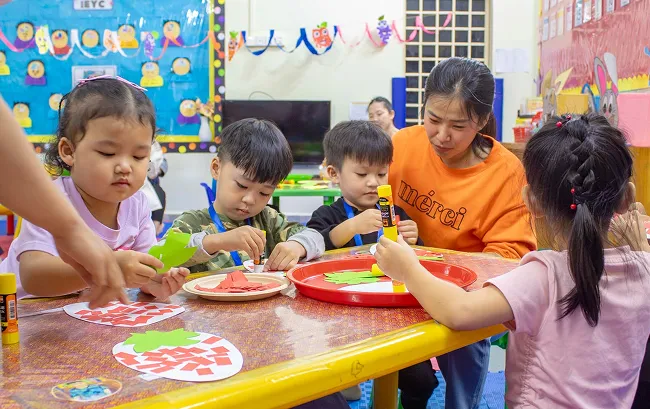
Before exploring its educational impact, we have to understand what is experiential learning. Experiential learning is a teaching approach where students learn by doing. Instead of passively receiving information through lectures alone, students engage in hands-on experiences, real-world applications, and reflective learning. Whether through projects, experiments, field trips, internships, simulations, or community involvement, experiential learning in education turns theory into practice by placing the learner at the centre of the learning process.
In many education systems—including secondary education in Cambodia—schools increasingly integrate experiential approaches to make learning more practical and meaningful.
The importance of experiential learning lies in its ability to prepare students for real-life challenges. Unlike traditional rote learning, experiential learning builds deeper understanding by combining action with reflection. It promotes skills such as critical thinking, creativity, collaboration, and resilience—capabilities that are essential for success in higher education, careers, and everyday life. In today’s rapidly evolving world, where knowledge alone is no longer enough, experiential learning shapes lifelong learners who can adapt, innovate, and think independently.
Below are six core benefits of experiential learning and why it continues to transform modern education.
1. Emphasises Critical Thinking and Problem-Solving Skills
One of the key strengths of experiential learning is its focus on developing critical thinking and problem-solving abilities. Instead of being given step-by-step answers, students are faced with situations that require them to analyse information, evaluate options, and make decisions independently.
In traditional classrooms, students often memorise information without truly understanding it. However, real-life situations rarely follow a script. Experiential learning prepares students to think logically and solve challenges under real conditions. This aligns with one of the major goals of education—to create individuals who can think for themselves rather than depend solely on instructions.
For instance, in a science lesson, instead of reading about environmental pollution, students might conduct water testing in nearby lakes or rivers and propose solutions. In mathematics, students may apply formulas to budget for a school event, teaching them how to use mathematics in practical scenarios. These kinds of projects force students to analyse, ask questions, and think critically.
2. Enhances Students’ Creative Aptitude
Another essential benefit of experiential learning in education is that it nurtures creativity. Students are encouraged to explore, experiment, and think outside the box. The hands-on nature of experiential learning invites curiosity and imagination.
This type of creative exploration is also deeply encouraged in programmes such as IGCSE international, where project-based learning helps students apply concepts beyond textbooks.
Creativity is increasingly seen as a valuable skill in the modern world, especially with automation and artificial intelligence changing industries. Students who can generate ideas, innovate, and approach problems creatively will be better prepared for future careers and entrepreneurship. Experiential learning helps break the limitations of rigid memorisation-based learning by allowing students to discover new solutions.
In a design thinking activity, students might be asked to create a prototype of a product that solves a community problem, such as a portable water filter or a sustainable shopping bag. Art, robotics, and STEM workshops also provide platforms where creative thinking is essential. This independence allows students to experiment with concepts and learn from both success and failure.
3. Raises Cultural and Global Awareness
Experiential learning also supports cultural and global understanding by exposing students to perspectives beyond their own. Through real-world interactions, collaborative projects, or international partnerships, students become aware of the diversification of the world they live in.
In today’s interconnected society, students need to understand global issues such as climate change, inequality, human rights, and sustainability. Experiential learning helps students gain respect for cultural differences and develop a sense of responsibility as global citizens. It builds empathy and teaches students to value diversity in thought, beliefs, and lifestyles.
For example, schools may organise cultural immersion trips, virtual exchanges with students from other countries, or service-learning projects that involve working with different communities. Participating in global awareness campaigns or charity projects also teaches students to take social action and contribute meaningfully to society.
4. Enables Better Concept Understanding
Experiential learning makes complex concepts easier to grasp by converting abstract theories into concrete experiences. When students are actively involved in a task, they understand why and how the knowledge is relevant.
Many students struggle with traditional classroom learning because they are unable to relate lessons to real-life situations. Experiential learning bridges that gap by connecting academic subjects with real-world applications. This makes learning meaningful, which increases motivation and engagement.
Instead of learning about photosynthesis solely from a textbook, students can grow plants, control light exposure, and record observations. In economics, students might simulate running a mini business to understand supply and demand. These hands-on experiences not only deepen understanding but also ignite curiosity and improve academic performance.
5. Builds a Growth Mindset and Future Adaptability
Experiential learning cultivates resilience and adaptability—traits that are critical in the real world. Students are encouraged to take initiative, face challenges, and reflect on both success and failure.
The world is constantly changing. Careers, industries, and technology evolve, and students must be mentally prepared to adapt to new challenges. Experiential learning strengthens emotional intelligence and helps students embrace mistakes as learning opportunities rather than setbacks. This develops a growth mindset, where students believe that ability and intelligence can improve through effort.
During group projects or skill-based competitions, students often face obstacles and must work together to overcome them. Whether they are troubleshooting code in a robotics lesson or redesigning a failed bridge model in physics, these experiences teach persistence. Reflection journals or feedback sessions also encourage personal growth and improvement.
6. Promotes Knowledge Retention and Long-Term Learning
One of the greatest advantages of experiential learning is that it improves knowledge retention. When students participate in tasks physically and mentally, they are more likely to remember what they learned.
Research shows that active participation activates multiple areas of the brain, making learning more effective. Unlike rote memorisation, experiential learning leads to deeper understanding and long-term memory because students connect information with personal experience.
Students who visit a historical site as part of a history lesson are more likely to remember historical events than if they only read about them. Cooking classes that teach measurements and fractions in mathematics help students retain math concepts longer. Field experiences, lab experiments, and simulations all contribute to stronger memory retention.
In Summary
What is experiential learning? It is a dynamic educational approach that empowers students to learn through action, reflection, and real-world experience. The importance of experiential learning lies in the way it transforms education from passive instruction to active engagement. It develops critical thinking, creativity,
cultural awareness, adaptability, and lasting understanding—skills essential for both academic and life success.
In a world that demands innovative thinkers and responsible global citizens, experiential learning in education offers a powerful solution. It prepares students not just for exams—but for life.